
Sciatica Treatment in Manchester & Cheshire for Persistent Nerve Pain
Altibury Health helps patients access specialist sciatica treatment in Manchester and Cheshire through independent consultant spinal specialists. If you are experiencing persistent leg pain, tingling, numbness or weakness associated with sciatica, your treating consultant will assess your symptoms, explain the likely cause and discuss appropriate non-surgical and surgical treatment options, where clinically indicated.
Specialist Sciatica Care Focused on the Cause of Your Symptoms
Through Altibury Health, patients can arrange consultations with independent spinal specialists experienced in assessing sciatica, slipped discs, spinal stenosis and other spinal nerve conditions.
- Consultant-led assessment for persistent or complex spinal symptoms
- Experience treating sciatica and spinal nerve compression
- Non-surgical treatment considered before surgery where appropriate
- Existing MRI, CT and X-ray imaging can be reviewed during consultation
- Minimally invasive spinal techniques available for suitable patients
- Personalised recommendations based on symptoms, imaging and daily needs
- Appointments available for self-pay and insured patients
Speak with our team on 0161 850 4786 or email admin@altiburyhealth.co.uk.
What Are the Symptoms of Sciatica?
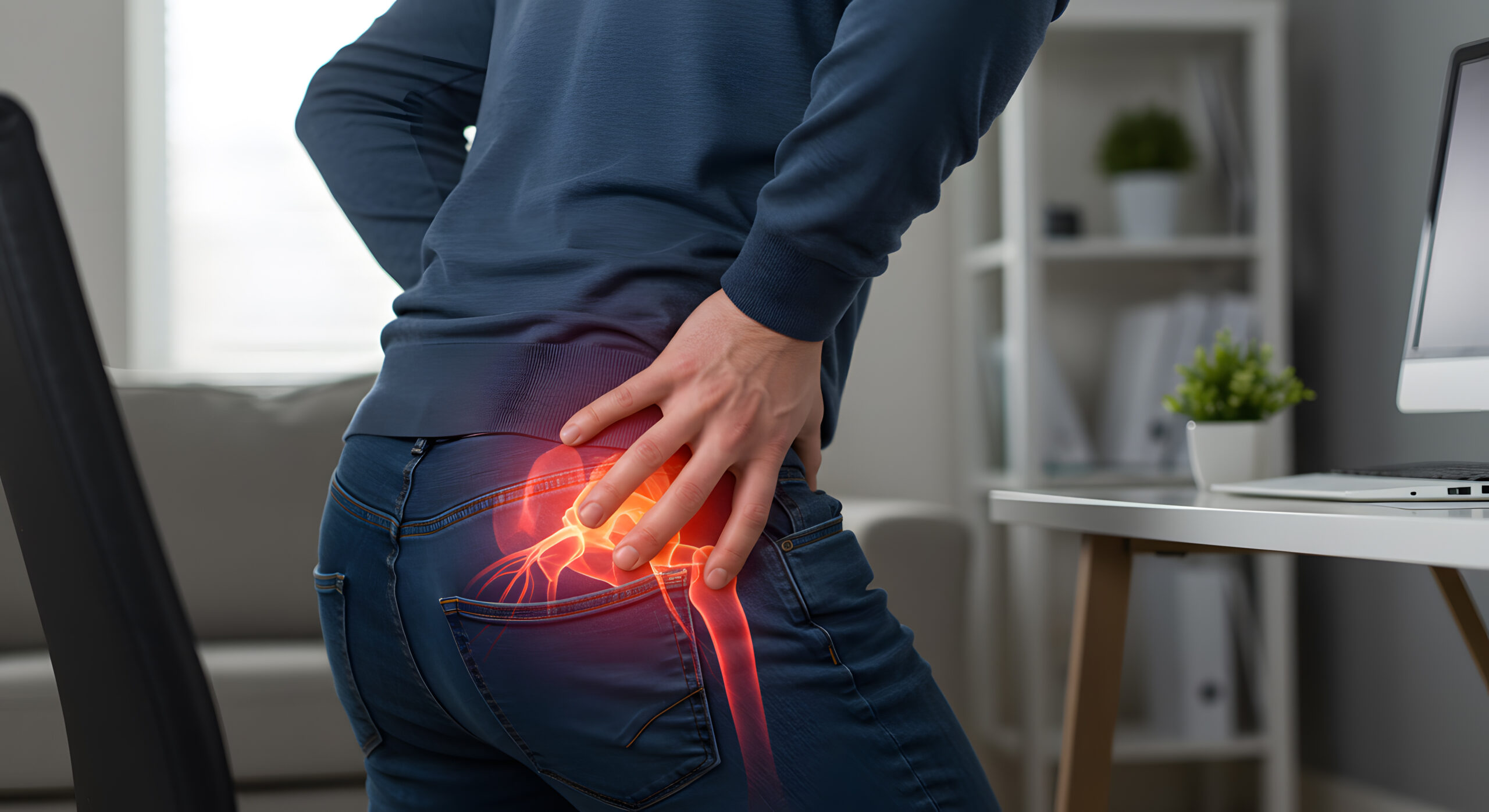
Sciatica describes symptoms caused when a nerve supplying the leg becomes irritated or compressed. It commonly affects the buttock and one leg, sometimes extending into the foot or toes.
Symptoms of sciatica can include:
- Sharp, burning or shooting leg pain
- Tingling or pins and needles
- Numbness in the leg or foot
- Weakness affecting the leg or foot
- Lower back pain alongside leg symptoms
- Pain aggravated by certain movements, coughing or sneezing

Sciatica is commonly associated with a slipped or herniated disc, although spinal stenosis, spondylolisthesis and other spinal conditions can also affect the nerves.
Treatment for Sciatica
Treatment depends on the underlying cause, how severe your symptoms are, how long they have been present and whether there is evidence of significant nerve compression.
Non-Surgical Treatment
Many people improve without an operation. Depending on your diagnosis, treatment may include remaining appropriately active, physiotherapy, activity modification, appropriate medication review and pain-management support.
Treatment is tailored to your symptoms and needs. Injections or surgery are considered only for selected patients where there is an appropriate clinical indication.
Spinal Injections
An epidural injection of local anaesthetic and steroid may be considered for acute, severe sciatica. An injection is not appropriate for everyone, and your specialist will discuss the potential benefits, risks and limitations in your particular circumstances.
Surgery for Sciatica
Most people with sciatica do not require surgery. Spinal decompression or disc surgery may be considered where non-surgical treatment has not sufficiently improved pain or function and scan findings are consistent with the symptoms. New or progressive neurological weakness or symptoms suggesting cauda equina syndrome require emergency NHS care.
The independent spinal consultants accessible through Altibury Health may offer microscopic, minimally invasive or endoscopic spinal procedures where indicated and available through the individual consultant.
What Happens During a Sciatica Consultation?
Your consultation is designed to establish where your symptoms are coming from and whether further investigation or treatment is appropriate.
Your specialist will usually:
- Discuss when the pain started and where it travels
- Ask about numbness, tingling or weakness
- Review previous treatments and medication
- Examine strength, sensation and reflexes
- Review existing scans where available
- Explain the likely cause in straightforward language
- Discuss suitable surgical and non-surgical options
- Recommend further imaging if clinically required
Bring any previous MRI scans, reports, clinic correspondence and an up-to-date medication list where available.
When Sciatica Needs Emergency NHS Assessment
Most sciatica is not an emergency. However, NEW difficulty starting or passing urine, changes in bladder sensation, loss of bladder or bowel control, numbness or altered sensation around the genitals, anus or bottom (saddle area), or new severe or rapidly worsening weakness in the legs may indicate cauda equina syndrome.
If any of these symptoms develop, ATTEND YOUR NEAREST NHS ACCIDENT & EMERGENCY (A&E) DEPARTMENT IMMEDIATELY. Cauda equina syndrome is a spinal emergency requiring urgent assessment.
Do not wait for an Altibury Health appointment, a routine GP consultation or a reply to an enquiry. If you cannot get to A&E safely, call 999.
Frequently Asked Questions
How Long Does Sciatica Last?
Sciatica often improves over several weeks or months, although symptoms can sometimes persist for longer or return. Persistent pain, worsening symptoms or symptoms interfering substantially with normal activities may warrant further assessment.
Do I Need an MRI for Sciatica?
Not everyone requires an MRI scan. Imaging may be appropriate when symptoms persist, neurological changes are present or the findings could influence treatment. If you already have an MRI, your specialist can usually review it during your consultation.
Will I Need Surgery for Sciatica?
Not necessarily. Many cases improve with appropriate non-surgical care. Surgery may be discussed when symptoms remain severe or disabling, neurological problems progress or imaging identifies nerve compression for which an operation may offer meaningful benefit.
Can a Slipped Disc Cause Sciatica?
Yes. A slipped or herniated disc is a common cause of sciatica because displaced disc material can irritate or compress a nearby spinal nerve. Spinal stenosis and spondylolisthesis are other recognised causes.
Can My Consultant Review Existing Scans?
Your treating consultant can usually review existing MRI, CT or X-ray images and reports if these are available for the appointment. The consultant may recommend further imaging where the existing information is insufficient.
Arrange a Specialist Sciatica Assessment
Persistent sciatica can affect walking, sleep, work and everyday activity. A specialist assessment can help establish why the nerve is being irritated and whether physiotherapy, pain management, injections, further investigation or surgical treatment should be considered.